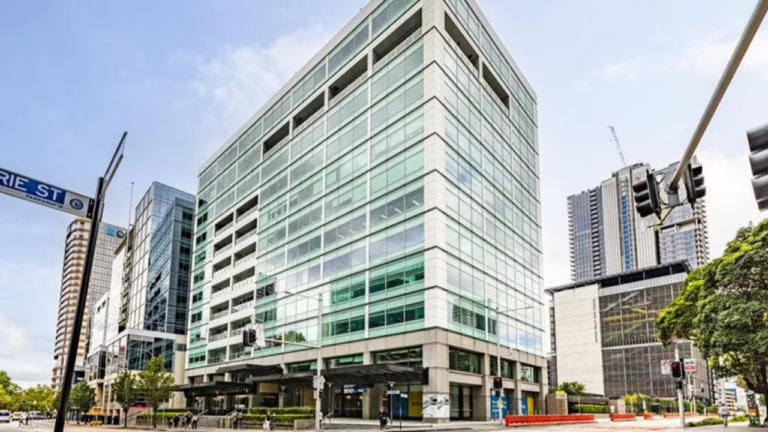
One of Australia’s leading property groups with a diverse portfolio of residential, commercial and mixed-use assets, sought to strengthen its approach to Scope 3 emissions reduction, particularly those linked to tenant operations and waste streams. As part of its broader sustainability agenda, the organisation aimed to move from strategic ambition to practical, commercially viable emission reduction initiatives that could be deployed within live assets.
A data driven, asset specific program was designed to translate sustainability objectives into operationally feasible actions. The work focused on validating real world implementation pathways rather than theoretical solutions.
The program identified a scalable pathway to reduce Scope 3 emissions using circular waste processing solutions, supported by robust commercial and operational analysis.
The goal was to identify practical and commercially viable ways to reduce Scope 3 emissions linked to tenant operations and food waste across mixed-use assets.
The program assessed food waste volumes, reviewed existing waste practices, evaluated circular waste processing technologies, and modelled emissions, cost, and operational impacts across different implementation scenarios.
The project identified a scalable pathway for reducing Scope 3 emissions, highlighted potential waste disposal cost savings for both the asset owner and tenants, and provided clear recommendations to support future pilots and broader rollout.
Food-waste diversion supports the sustainability strategy by helping reduce emissions, improve waste management outcomes, and build circular economy principles into long-term asset planning.

Explore our case studies showing how our ESG, climate and sustainability solutions deliver impact across industries, scales and stages of maturity—from readiness and reporting through to delivery and capability‑building.
Acumentis acknowledges the Traditional Custodians of the lands where we live, learn and work and their connections to land, sea and community throughout Australia.
We pay our respect to their Elders past, present and emerging and extend that respect to all Aboriginal and Torres Strait Islander people we work with and walk beside today.