Marco Gritti
National Director ESG

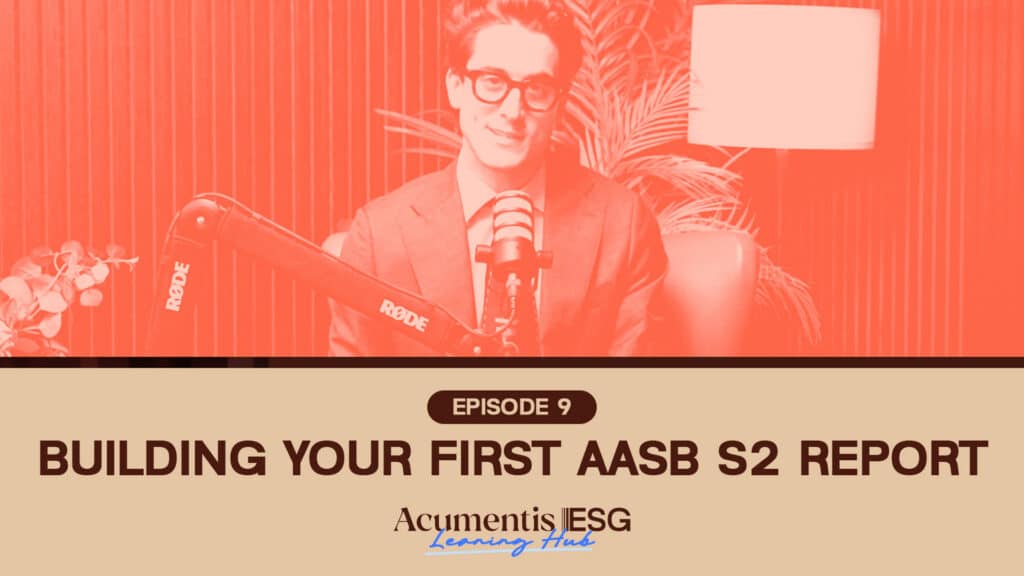
Most first-time reporters try to write a perfect report, and when the data falls short, they hide the gaps. Assurance reviewers don’t penalise honest gaps. They penalise hidden ones.
AASB S2 doesn’t require perfection in year one. It requires disclosure that is structured, transparent and defensible. In this final module of the ASRS climate reporting series, I bring the previous eight episodes together and show you how to put your first report on paper. It includes the structure we use with clients, realistic page lengths, four ways to handle data gaps credibly, and the writing principles that make a report readable to your board.
I also walk through how our case study company, Limon Pty Ltd, built a 42-page report that came through limited assurance with feedback on its clarity and improvement roadmap.
Year one sets your benchmark. Assurance only gets more rigorous from here.
By the end of this episode, you’ll be able to:
Episode coming soon. Register your interest below and we will notify you when it’s live.
"*" indicates required fields
Short, practical video modules that help you quickly understand specific ESG and mandatory climate reporting topics. Each module focuses on one clear topic, explains relevant requirements, and includes practical examples you can apply immediately, all designed to fit learning around your schedule.
Liability limited by a scheme approved under Professional Standards Legislation.
Acumentis acknowledges the Traditional Custodians of the lands where we live, learn and work and their connections to land, sea and community throughout Australia.
We pay our respect to their Elders past, present and emerging and extend that respect to all Aboriginal and Torres Strait Islander people we work with and walk beside today.